Beyond the Toolkit: The Human Side of Being a Youth Worker
What makes a group truly inclusive? Bringing people together is one thing; making sure everyone feels heard, respected and able to take part is another.
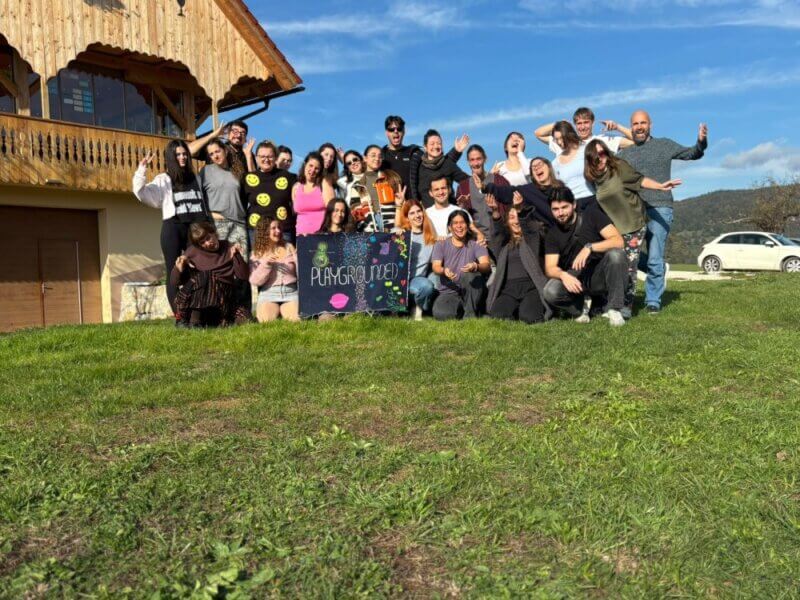
During the Training Playgrounded, participants explored a range of youth work competences through practical activities, teamwork and intercultural exchanges. This article focuses on three of them: Communicating Meaningfully, Collaborating in Teams and Displaying Intercultural Sensitivity.
Through participants’ experiences, we discover how listening, working together and embracing differences shape the way we relate to others. These everyday interactions matter: they influence whose voices are heard, who feels included and whether everyone has an equal opportunity to participate. In this sense, developing these competences is also about putting human rights into practice, not just as principles, but through the way we treat one another.
Communicating Meaningfully: Listening Beyond Words
Meaningful communication is not simply about expressing ideas clearly. It also means learning to listen with attention, understand different perspectives and recognise what others may need, even when they struggle to put it into words.
Throughout the Training Playgrounded, activities focused on active listening and positive gossip encouraged participants to look beyond their usual ways of interacting. Rather than concentrating on what to say next, they were invited to be present and genuinely attentive to others. This meant learning “to be more aware, listen, hear and be grounded” and discovering how to “listen and understand people when they talk.” The experience also encouraged a more personal kind of awareness: “learn how to listen yourself and giving myself permission to be not available and tired.”
These reflections show that meaningful communication begins with awareness, both of others and of ourselves. It requires us to recognise our limits, respect those of others and create space for honest exchanges.
This competency is particularly important in youth work, where trust is often the foundation for participation and engagement. Young people need to feel heard and respected before they can confidently express their needs, opinions or concerns. In this sense, meaningful communication is closely linked to human rights, especially freedom of expression and the right to participate. Listening is not merely a social skill; it is a way of recognising each person’s dignity and making sure their voice matters.
Collaborating in Teams: Learning Through Others
Collaboration often sounds straightforward: people come together, share ideas and work towards a common goal. In practice, however, working as a team also means accepting uncertainty, navigating disagreements and recognising that things do not always go as planned.
During the Training Playgrounded, collective challenges, including the LEGO Safe Place activity and outdoor group experiences, offered opportunities to discover what cooperation looks like in practice. Participants had to exchange ideas, adapt to one another and find solutions together. These experiences also challenged the idea that success depends on getting everything right. The tension between “perfectionism VS connections” became an important lesson, alongside the realisation that “a failure and mistakes can give a positive impact” when people collaborate.
Working together also opened the door to new perspectives and relationships. Learning “new things from other people” and discovering how to communicate meaningfully with others showed how collaboration develops not only through shared goals, but also through a willingness to learn from one another.
For youth workers, this competency is essential because meaningful participation rarely happens in isolation. Creating activities and projects that respond to young people’s needs requires cooperation, shared responsibility and an openness to different contributions. It also reflects fundamental human rights principles, including equality, inclusion and participation. When everyone has the opportunity to contribute, make mistakes and be taken seriously, teamwork becomes more than a practical method: it becomes a way to challenge exclusion and build more democratic communities.
Displaying Intercultural Sensitivity: Making Space for Differences
Living and working in an intercultural environment means encountering different habits, values and ways of understanding the world. But intercultural sensitivity goes beyond recognising differences: it involves questioning our assumptions, remaining curious and navigating differences without turning them into barriers.
Through shared experiences and exchanges, participants reflected on how culture shapes everyday interactions. Discovering “what it’s like to live and be in multicultural group” went hand in hand with learning to “create a safe place beside the cultural difference.” They also learned to express feelings, understand themselves better and accept different perceptions.
These lessons were not always about reaching agreement, but about listening, exchanging perspectives and approaching unfamiliar behaviours with openness. Practising “empathy” and communicating in English within an international environment were also part of this learning process, highlighting intercultural learning as both personal reflection and collective discovery.
In youth work, intercultural sensitivity helps create spaces where young people can participate without hiding or justifying who they are. In diverse communities, it can prevent misunderstandings and exclusion while fostering inclusion. This competency directly connects to human rights, particularly equality and non-discrimination. Respecting cultural differences does not mean agreeing on everything; it means ensuring that differences never undermine anyone’s dignity, belonging or equal participation.
Conclusion: From Personal Growth to Collective Responsibility
Meaningful communication, collaboration and intercultural sensitivity may seem like individual skills, but their impact reaches far beyond the individual. They influence how we treat others, how we share spaces and how we respond when someone is excluded or unheard.
The experiences shared during the Training Playgrounded demonstrate that learning can begin with something as simple as listening more carefully, accepting a mistake or trying to understand a different perspective. Yet these small changes can have a wider impact, helping create relationships and communities grounded in respect, dignity and equality.
For youth workers, developing these competences is therefore not only about becoming better facilitators. It is also about creating opportunities for young people to express themselves, participate in decisions and recognise their own ability to contribute to society. This is where personal development connects with human rights: respecting people’s dignity also means recognising their voices, their rights and their capacity to take part in collective life.
This perspective opens the door to another important competence for youth workers: Being Civically Engaged. Without exploring this competence in detail, it is worth recognising the connection. When people learn to listen to others, cooperate across differences and create more inclusive spaces, they also develop foundations for taking an active role in their communities.
Ultimately, youth work can be a place where learning becomes more than personal growth. It can be a starting point for building communities in which human rights are not just principles we talk about, but values we put into practice through our everyday actions.
By Sarah PEREIRA